
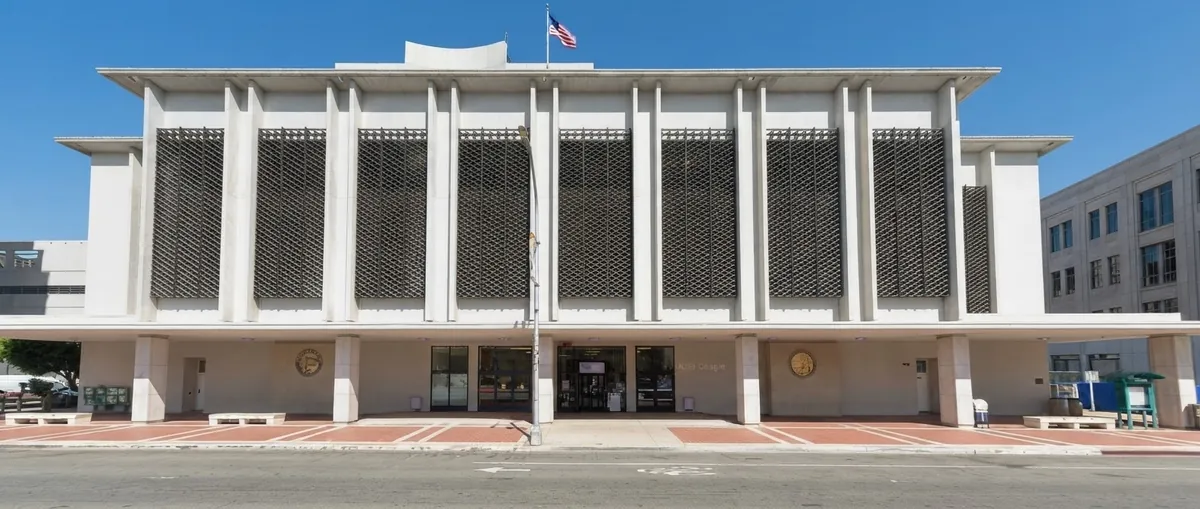
Court records in San Mateo County, California, are maintained by the Clerk's Office of the Superior Court of the county and are accessible through online tools, official court portals, and directly at the court clerk's office. SanMateoCourt.us will help you find publicly available information about court cases. Additionally, you can use the online case access portal of the Superior Court, visit the records management office, or refer to other California state resources.
San Mateo Court System Overview
San Mateo County is served by the Superior Court of California — Superior Court of California, County of San Mateo. In California, each of the 58 counties has its own superior court, which is a court of general jurisdiction. The San Mateo Superior Court handles criminal, civil, family, probate, and other types of cases. The court is part of the judicial district that exclusively covers the territory of San Mateo County. The main location of the court is the Hall of Justice in Redwood City.
Administrative leadership is provided by the Presiding Judge and the Court Executive Officer. Current news and court announcements are published on the official court website.
Courts Serving San Mateo
Residents of the county are served by several judicial instances — at the state and federal levels.
State Superior Court
Additional Court Location
U.S. District Court
San Mateo County falls under the jurisdiction of the United States District Court for the Northern District of California.
U.S. Bankruptcy Court
What Types of Cases San Mateo Courts Hear
The San Mateo Superior Court is a court of general jurisdiction. This means it handles virtually all categories of cases at the state level:
- Criminal cases — felonies, misdemeanors, infractions
- Civil lawsuits, including small claims cases
- Family law — divorce, custody, alimony
- Probate cases — inheritance, guardianship, conservatorship
- Juvenile cases — child protection, adoption
- Traffic violations
Specific divisions of the court specialize in certain types of cases, allowing for more efficient workload distribution.
District Court Cases in San Mateo
In California, there is no separate division into "district court" and "magistrate court" at the state level — instead, the Superior Court serves as the sole court of first instance. It handles all felonies from initial hearing to sentencing, civil cases without monetary limits, and appeals from administrative agencies. Cases are assigned to judges based on their specialization. Criminal felonies begin with arraignment, followed by preliminary hearings, and if there is sufficient evidence, the case proceeds to trial. Detailed information on criminal cases, schedules, and warrants can be found on the court's criminal division page.
Magistrate Court Cases in San Mateo
Although California does not use a separate magistrate system, the San Mateo Superior Court has divisions that effectively perform similar functions. Misdemeanors and infractions, including traffic tickets and DUI, are handled by judges assigned to these categories. Small claims cases in California are limited to $12,500 for individuals. Limited civil cases cover claims up to $25,000.
Preliminary hearings in felony cases are also conducted within the Superior Court. Judges may be assigned to specific types of cases — for example, one judge may handle only traffic cases, another small claims. To check traffic tickets, the court offers a separate Traffic Portal.
Family Law, Probate, and Juvenile Matters in San Mateo
Family Law
The Family Law Division handles divorce, child custody determinations, alimony, paternity establishment, and protective orders. Parties representing themselves (pro per) can request electronic access to their family cases through the court system.
Probate
The Probate Division handles cases involving the estates of deceased persons, guardianship, conservatorship, and trusts. These cases are typically conducted at the Hall of Justice. Copies of documents can be ordered through mail request.
Juvenile Matters
Juvenile cases — child protection, juvenile offenses — are confidential under California law. Access to these records is strictly limited. For information regarding a specific case, you must contact the court clerk's office directly.
How Cases Move Through the San Mateo Court System
- Filing a case. A criminal case begins with a complaint, a civil case with a complaint or petition. Documents are filed with the court clerk's office.
- Assignment of a judge. The case is assigned to a specific judge depending on the type and workload of the division.
- First hearing. In criminal cases — arraignment. In civil cases — case management conference.
- Pre-trial phase. Parties exchange evidence (discovery), file motions. In criminal cases, plea negotiations may occur.
- Trial or resolution. The case may end with a trial, plea agreement, settlement, or default judgment.
- Post-judgment. Sentencing, filing an appeal, enforcement of the court's decision.
Specific timelines and procedures depend on the category of the case. The hearing schedule is available on the court's website.
Court Administration, Local Rules, and Public Access in San Mateo
Administration of the San Mateo Superior Court is carried out by the Presiding Judge in conjunction with the Court Executive Officer. Local Rules govern procedural aspects specific to this county — from filing deadlines to the format of motions.
Public access to court records is governed by the rules of the Judicial Branch of California. Most court cases are publicly accessible, except for sealed cases, juvenile cases, and certain family cases. The California Public Records Act guarantees citizens the right to access public information held by government agencies. The public access policy for court administrative records can be viewed on the Judicial Branch website.
Hearings in the San Mateo Superior Court are generally open to the public. Some hearings may be conducted remotely — check the specific procedure on the page of the relevant court division or by calling the clerk's office at (650) 261-5000.
Court Records and Related Court Resources in San Mateo
- Online case search. The court uses the Odyssey system. Through Odyssey portals, you can search for cases by number or party name. The MIDX index allows you to view Superior Court records. Documents and hearing dates are available for cases filed after 2000.
- Records management. The Records Management Division provides copies of criminal, civil, family, and probate cases. For marriage, birth, or death certificates, contact the County Recorder's Office.
- Ordering copies by mail. Copies of documents can be ordered by mail for criminal, civil, family, and probate cases.
- Criminal history. To obtain a copy of your criminal history, you must submit fingerprints and pay a $25 fee through the California Department of Justice.
- Inmate search. The California Incarcerated Records & Information Search (CIRIS) allows you to find individuals in state correctional facilities. For additional assistance, contact the CDCR Identification Unit at (916) 445-6713.
- Crime statistics. The Department of Justice Data Portal contains California criminal justice statistics, including the Automatic Record Review (ARR) program.
- Vital records. The California Department of Public Health – Vital Records maintains birth, death, and marriage records at the state level. Divorce records for the period 1962–1984 are available through a separate request to CDPH.
- Self-help. Parties representing themselves can obtain electronic access to their family or civil cases through the Pro Per Electronic Case Access program.